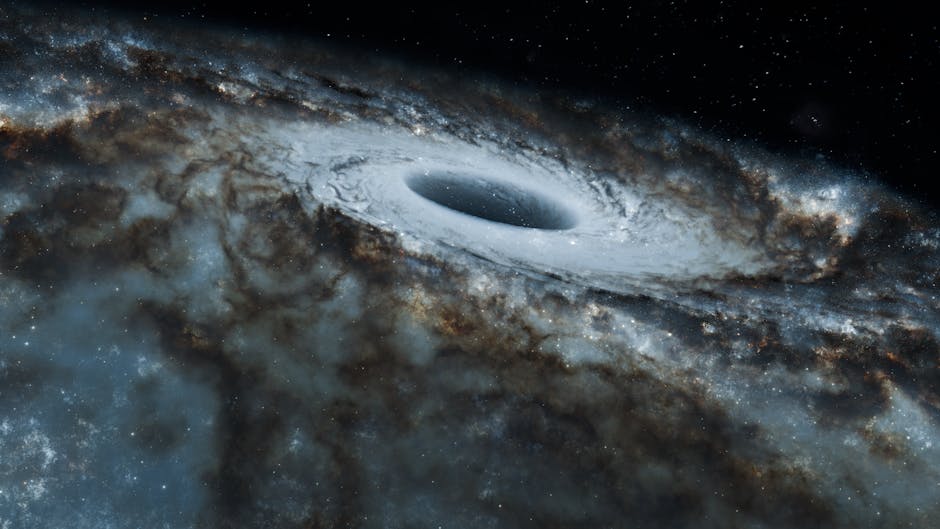
A Cosmic Giant Stirs to Life (Image Credits: Pexels)
Astronomers recently observed a supermassive black hole at the core of galaxy J1007+3540 spring back into action after nearly 100 million years of dormancy. This reactivation unleashed powerful jets of magnetized plasma that extend almost one million light-years across space, carving dramatic structures in the surrounding galaxy cluster.[1][2] The event, captured through advanced radio telescopes, offers a rare glimpse into the intermittent fury of active galactic nuclei.
A Cosmic Giant Stirs to Life
Researchers spotted a compact, bright inner jet signaling the black hole’s abrupt return to activity. This fresh outburst pierced through remnants of older eruptions, creating a layered spectacle of young energy amid faded plasma.[3] The discovery highlighted J1007+3540 as a standout example among gigantic radio galaxies.
Lead researcher Shobha Kumari described the scene vividly. “It’s like watching a cosmic volcano erupt again after ages of calm – except this one is big enough to carve out structures stretching nearly a million light-years across space,” she stated.[1] Observations revealed the jets’ immense scale, nearly ten times the width of the Milky Way in some projections.
Traces of Ancient Outbursts
Surrounding the new jets lay a cocoon of exhausted plasma from prior episodes, distorted by the cluster’s hot gas. This older material formed compressed lobes and a faint southwestern tail, dragged millions of years ago through intergalactic space.[2] Such features confirmed multiple cycles of black hole activity over cosmic timescales.
The northern lobe showed particular warping, with curved backflow patterns where plasma bent under external pressure. An ultra-steep radio spectrum in compressed zones indicated aged particles that had lost much energy.[3] These remnants painted a history of on-off behavior, with long dormant phases punctuating violent restarts.
Clash in the Galaxy Cluster
J1007+3540 resides in a massive cluster where scorching gas exerts crushing force on the erupting jets. This environment bent and squeezed the plasma streams, reshaping the radio galaxy’s morphology in real time.[1] Dr. Sabyasachi Pal noted, “J1007+3540 is one of the clearest and most spectacular examples of episodic AGN with jet-cluster interaction.”[2]
- Hot cluster gas compresses northern lobes, creating backflow signatures.
- Faint tails trace ancient plasma trails across millions of light-years.
- New jets pierce older structures, fueling ongoing dynamic battles.
- Environmental pressure distorts spectra, revealing particle aging processes.
- Overall span approaches one million light-years, dwarfing typical galactic features.
Unveiling Episodic Black Hole Cycles
The findings illuminated how supermassive black holes toggle between active and quiet states, influenced by gas inflows. During dormancy, fuel depletes; fresh accretion then reignites jets at near-light speeds.[4] This episodic nature challenges steady-growth models of galaxies.
Key instruments included the Low Frequency Array (LOFAR) in the Netherlands and India’s upgraded Giant Metrewave Radio Telescope (uGMRT), which provided high-sensitivity images overlaid on Pan-STARRS optical data. The international team, including researchers from India and Poland, published results in Monthly Notices of the Royal Astronomical Society.[3] Future studies will probe duty cycles and feedback effects on star formation.
What This Means for Cosmic Evolution
This eruption underscores galaxies as arenas of explosive black hole power versus environmental resistance. Repeated outbursts sculpt clusters, regulate gas, and influence star birth across eons.[1] J1007+3540 exemplifies how such feedback drives long-term change.
Key Takeaways:
- Black hole reactivated after 100 million years, jets span ~1 million light-years.
- Multiple activity cycles evident in layered plasma structures.
- Cluster pressure warps jets, revealing dynamic galaxy evolution.
As astronomers continue monitoring, this cosmic restart promises deeper understanding of universal engines. What do you think about this black hole’s comeback? Share your thoughts in the comments.