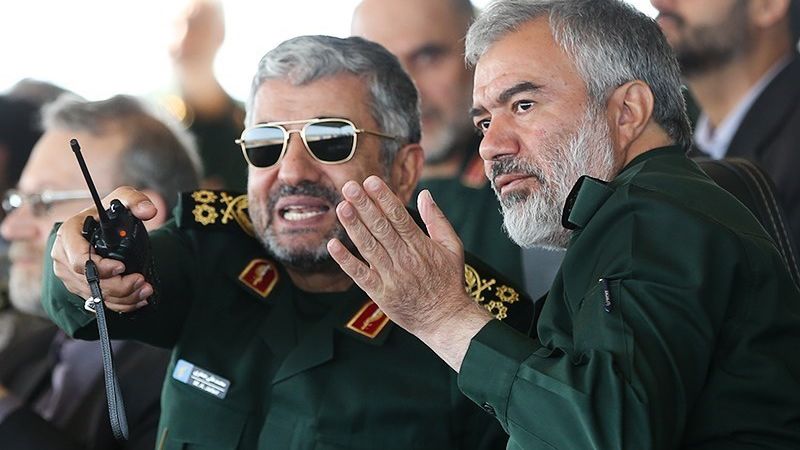
This hard-line Iranian general is a major player in talks with US over war – Image for illustrative purposes only (Image credits: upload.wikimedia.org)
The war between Iran and the United States has already disrupted energy supplies across the Gulf and left civilians in several countries facing higher costs and daily uncertainty. Now a longtime military figure with a record of regional operations has moved into a central role shaping Tehran’s approach to any possible settlement. Brig. Gen. Ahmad Vahidi’s influence comes at a moment when Iran’s leadership structure itself remains unclear after recent strikes.
From Battlefield Veteran to Key Decision Maker
Vahidi, born in 1958 in the southern city of Shiraz, joined the Revolutionary Guard shortly after the 1979 revolution. He fought in the eight-year war with Iraq and later moved into intelligence and external operations. Over time he rose through the ranks, gaining support from senior figures including former president Akbar Hashemi Rafsanjani.
His career includes leadership of the Quds Force, the Guard’s overseas arm, where he helped build ties with allied groups across the Middle East. American officials have long linked him to attacks such as the 1994 bombing of a Jewish community center in Argentina and the 1996 Khobar Towers bombing in Saudi Arabia, though Iran has consistently denied involvement. In 2022 he also directed security forces during the crackdown on protests that followed the death of Mahsa Amini in police custody.
Seizing Influence Amid Leadership Uncertainty
After his predecessor was killed early in the current conflict, Vahidi was elevated to command the Revolutionary Guard. The force controls Iran’s ballistic missiles and coastal patrol units that have threatened shipping in the Persian Gulf. Experts at the Institute for the Study of War now describe him and his circle as holding significant sway over both military actions and negotiation strategy.
Iran’s supreme leader, Ayatollah Mojtaba Khamenei, has remained out of public view since the Feb. 28 Israeli strikes that killed his father. This vacuum has intensified competition among senior officials for access and influence. Vahidi has not appeared publicly since early February, yet Iranian media reports and regional officials indicate he has become the main contact point for outside mediators seeking to advance talks with Washington.
Practical Effects on Diplomacy and Daily Life
Tehran’s current bargaining position centers on retaining its stockpile of highly enriched uranium while pressing for relief from sanctions. This stance aligns with Vahidi’s long-standing view that the United States must be confronted at every opportunity. The result has been a prolonged standoff that keeps oil and gas exports from the Strait of Hormuz under threat, raising global energy prices and straining economies in Gulf Arab states.
Earlier talks hosted by Pakistan in April ended without agreement. Iranian parliament speaker Mohammad Bagher Qalibaf and Foreign Minister Abbas Araghchi faced internal criticism for appearing too open to compromise. Since then, Vahidi’s involvement has hardened the Iranian side, according to officials familiar with the mediation. President Masoud Pezeshkian has publicly noted limited meetings with the new supreme leader, yet real authority appears to rest with Guard figures.
What Comes Next for Stakeholders
Observers point to several developments worth watching in the coming weeks:
- Whether Vahidi or other Guard commanders gain formal titles that confirm their expanded role.
- Any public statements from the supreme leader that clarify who holds final say on talks.
- Signs that Gulf nations or Pakistan can still serve as neutral channels.
- Shifts in Iran’s enforcement of domestic policies, such as hijab rules, that Vahidi has previously defended as essential to the republic’s identity.
These changes affect not only diplomats in Washington and Tehran but also families across the region who already cope with higher fuel costs and restricted travel.
Broader Consequences for Regional Stability
Analysts note that Vahidi’s background in the Quds Force and his emphasis on resistance make any quick accord less likely. The United States has sought a single reliable interlocutor, yet the current arrangement involves multiple power centers. This fragmented structure, combined with the Guard’s control over key military assets, raises the risk that talks could stall or collapse.
The human cost continues to mount. Energy price spikes hit households from Riyadh to Dubai, while uncertainty over leadership succession keeps ordinary Iranians guessing about future policies. Until clearer lines of authority emerge, the path to ending the conflict remains narrow and heavily guarded by figures like Vahidi.