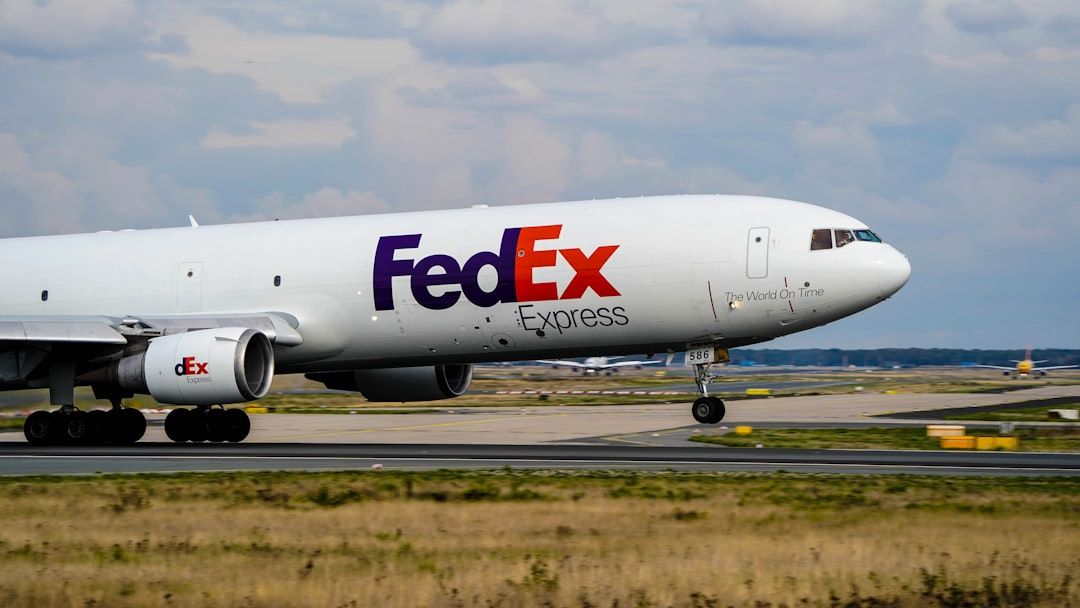
The MD-11 cargo planes like the one in last fall’s deadly UPS crash in Louisville return to the air – Image for illustrative purposes only (Image credits: Unsplash)
The Federal Aviation Administration has authorized the return of MD-11 cargo aircraft to service, ending a grounding that began after a UPS jet lost an engine during takeoff last November. FedEx, the largest remaining operator of the type, restarted flights with the planes over the weekend. The decision follows Boeing’s submission of a targeted repair plan that regulators reviewed in detail before granting approval.
Crash Details and Immediate Response
The grounding stemmed from a November 2025 accident at Louisville’s Muhammad Ali International Airport. A UPS MD-11 bound for Hawaii shed its left engine while accelerating down the runway, killing the three pilots on board and twelve people on the ground. Investigators quickly linked the separation to a spherical bearing that helps secure the engine to the wing.
The FAA ordered all MD-11s out of service pending a fix. UPS, which had relied on the aircraft for roughly nine percent of its fleet, chose to retire the entire group rather than pursue repairs. Western Global Airlines, another operator, has remained silent on its plans.
Boeing’s Corrective Measures
Boeing proposed replacing the spherical bearing and increasing inspection frequency for the engine-attachment hardware. The company had recorded four similar bearing failures on three different MD-11s as early as 2011, yet concluded at the time that the issue did not pose an immediate flight-safety risk. The new protocol addresses that earlier assessment.
Regulators determined the combination of part replacement and enhanced checks sufficiently mitigates the hazard. The National Transportation Safety Board is scheduled to hold two days of public hearings next week to examine the sequence of events in greater depth.
FedEx’s Return to Operations
FedEx, which operates 46 MD-11s representing about four percent of its fleet, worked directly with Boeing and the FAA to complete the required work. The carrier confirmed it had inspected and repaired its aircraft in line with the approved plan. More than two dozen of its MD-11s had already been in storage before the crash.
The company issued a statement emphasizing that safety remains its top priority. It also reiterated a pre-existing plan to phase out the MD-11s over time in favor of newer, more fuel-efficient models.
Industry and Legal Reactions
Aviation safety expert Jeff Guzzetti, a former NTSB and FAA investigator, expressed surprise that the planes remained grounded as long as they did. He stated he is confident the corrective actions will restore safe engine attachment and welcomed the aircraft back into service.
Lawyers representing families of crash victims have urged continued vigilance. Bradley Cosgrove noted that thorough verification of the repairs is essential before the fleet resumes full operations.
What matters now: The FAA’s approval allows cargo capacity to stabilize while the NTSB continues its formal review. Operators must maintain heightened inspections, and regulators will monitor the fleet closely in the months ahead.
The episode illustrates the tension between keeping proven but aging freighters in service and the cost of sustaining them. With the immediate safety concern addressed through a focused mechanical change, the MD-11s are expected to continue hauling packages until carriers complete their longer-term fleet transitions.