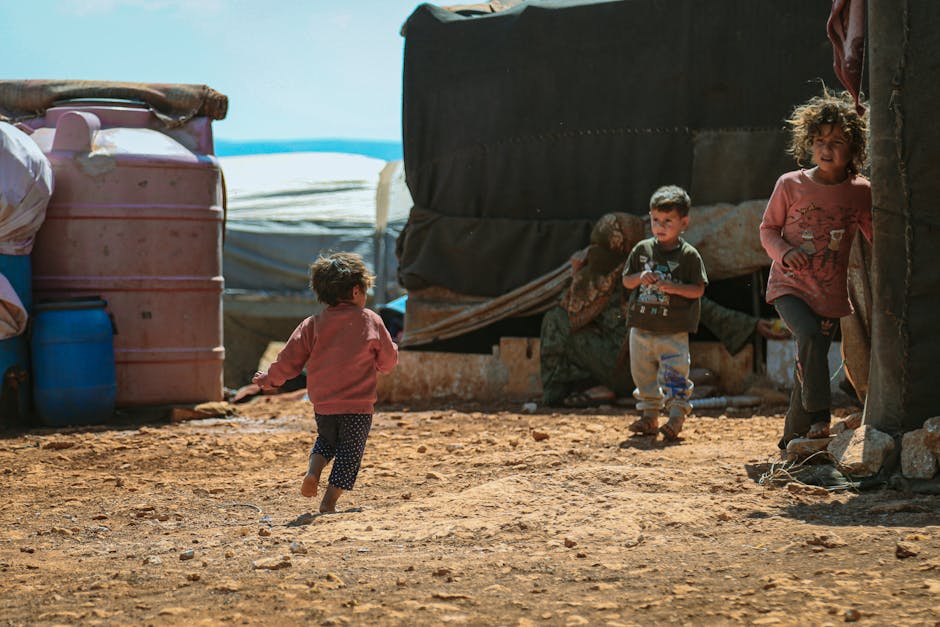
Play Emerges as Essential Therapy in Crisis Zones (Image Credits: Pexels)
Aysaita Refugee Camp, Ethiopia – Home to around 40,000 Eritreans in the arid Afar region, the camp highlights the daily hardships faced by displaced families, particularly its 10,000 children under age 10. Humanitarian efforts often prioritize shelter and food, leaving play as a vital yet overlooked need. A UK-based charity called Playrise steps in with flat-packed, reconfigurable playground kits designed specifically for such environments. These structures promise not just recreation but essential support for cognitive growth and emotional recovery.
Play Emerges as Essential Therapy in Crisis Zones
Studies have long established play’s role in building executive function, motor skills, and social abilities in children, benefits that gain urgency amid trauma. For kids in refugee camps, unstructured play serves as a therapeutic escape, restoring normalcy after violence. Alexander Meininger, Playrise’s founder and director, recognized this disparity in early 2024 while observing his young children at home against a backdrop of global conflicts in places like Ukraine, Gaza, Sudan, and Eritrea.
He noted how the absence of safe play spaces compounded displacement’s toll. “Play is important generally for every child to develop, but especially for kids who are in these really extreme circumstances,” Meininger stated. “It helps them to regain some sense of normality, overcome some trauma, escape the horrors that they’ve been through.” This realization drove the charity’s mission to reach the nearly 50 million children worldwide displaced by conflict.
Workshops Shape a Child-Centered Approach
Playrise collaborated with London architecture firm OMMX to ground their designs in real needs. In June and July 2025, teams led by Meininger and OMMX cofounder Hikaru Nissanke visited sites including Cairo for Palestinian refugees, southern Egyptian villages hosting Sudanese families, and Aysaita itself. They used simple fabric kits to spark impromptu play, prioritizing intuitive activities like jumping and singing over language barriers.
Children improvised parachutes, slides, and hammocks, revealing a desire for versatile, evolving structures. Nissanke emphasized learning from locals: “We wanted something very direct, authentic, and in the moment. We didn’t want to just assume one way of thinking.” Parents highlighted building skills’ value for maintaining fragile homes. These sessions exposed site-specific challenges, from desert openness to urban constraints, informing a highly adaptable system.
Engineering a Durable, Lego-Style Framework
The resulting prototype mimics giant building blocks, using wood for its coolness in heat and longevity over rusty metal alternatives observed on-site. Custom 26-millimeter holes in beams prevent finger traps, paired with bolts, pipes, and washers for secure, tool-simple assembly. This setup allows endless reconfiguration into climbers, forts, or stages.
Supplemental elements enhance versatility:
- Colorful fabric sails for shade and art.
- Handholds, swings, and rope nets for climbing.
- Ground-level options like drums for accessibility.
Meininger described the prototype’s appeal: “When you see it in reality it really looks like a giant toy… it looks a bit like Lego, and you think, Wow, this is really joyful.” Safety consultations ensured compliance with high standards, balancing ease and sturdiness.
Deployments Begin with Broader Ambitions
The first kit heads to Aysaita by late April, with Cairo and southern Egypt next. Feedback will refine additions for diverse abilities. Playrise envisions scalable kits available online, extending play’s healing power universally.
Meininger underscored its primacy: “Everything kids do is play. That’s how they experience the world.” Child psychologist Sophia Apdi captured it succinctly during discussions: “Play is the language of children.”
Key Takeaways
- Play aids trauma recovery and skill-building for displaced children.
- Modular kits adapt to any terrain, empowering kids to create.
- Community input ensures cultural relevance and practicality.
This initiative redefines aid by prioritizing joy’s restorative force. As Playrise expands, it challenges the status quo in humanitarian design. What role should play play in crisis response? Share your thoughts in the comments.