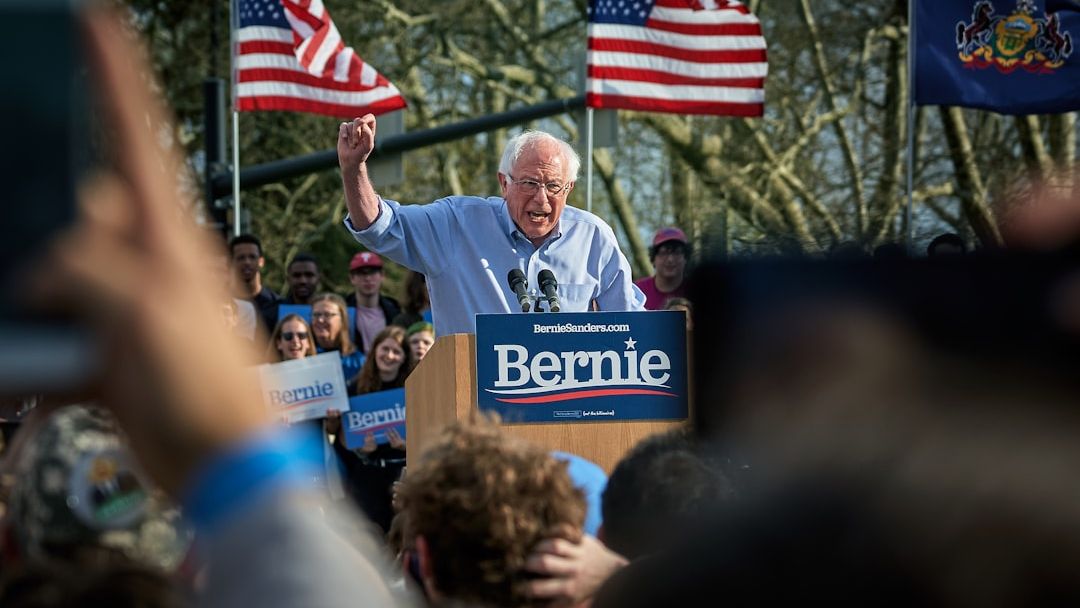
Sanders Keeps Shaping Democrat Candidacies in His Mold – Image for illustrative purposes only (Image credits: Unsplash)
Vermont Senator Bernie Sanders continued his push to reshape Democratic Senate contests by campaigning for progressive candidates in Minnesota and Michigan. This followed a significant development in Maine, where his early endorsement helped propel Graham Platner past Governor Janet Mills, prompting her to suspend her campaign.[1][2] At 84, Sanders demonstrated his lasting vigor on his "Fighting Oligarchy" tour, drawing large crowds to rallies focused on economic inequality and challenging establishment figures.
Maine’s Primary Pivot Sets the Stage
Graham Platner emerged as the frontrunner in Maine’s Democratic Senate primary after receiving Sanders’ early backing. Governor Janet Mills, recruited and endorsed by Senate Minority Leader Chuck Schumer, suspended her bid recently, clearing the path for Platner to face Republican incumbent Susan Collins.[1][3] Sanders viewed this outcome as a sign of shifting voter priorities.
"Mills’s decision to drop out of the race is indicative of the kind of changes we’re seeing in this country," Sanders stated in an interview. "The American people are tired of status quo politics. The very rich get richer. Everybody else struggles."[1] He praised Platner for standing against big money and advocating for working-class interests, a message resonating beyond Maine. Republicans planned an aggressive response against Platner in the general election.[1]
Revving Up Support in Minnesota
Sanders joined Minnesota Lieutenant Governor Peggy Flanagan at a rally in Rochester on May 2, where about 1,300 attendees filled John Marshall High School auditorium. The event doubled as part of his tour against oligarchy, emphasizing public funding for elections and overturning Citizens United.[4] Flanagan, seeking to replace retiring Senator Tina Smith, faced Representative Angie Craig for the Democratic-Farmer-Labor endorsement.
Sanders highlighted enormous challenges like economic inequality and billionaire influence. "The challenges that we face are enormous, and the decisions that we make right now will not only shape the future of our country, but the entire planet," he declared.[4] Flanagan criticized Washington priorities, noting, "There is always plenty of money for ballrooms and bombs, just not for you." Senator Tina Smith and Attorney General Keith Ellison also spoke, reinforcing the progressive pitch to rural and working-class voters.[4]
Party leaders had favored Craig, urging restraint in the contest, but Sanders pressed forward undeterred.
Michigan Rally Ignites Progressive Fire
The following day, Sanders appeared in Detroit at Mumford High School to back Abdul El-Sayed’s Senate bid and state Representative Donavan McKinney’s House challenge. A packed gymnasium heard Sanders tout recent progressive wins, like Zohran Mamdani’s New York mayoral victory despite establishment opposition.[5]
"I don’t care how much money the other folks have, when you have 100,000 people knocking on doors… there ain’t nobody gonna beat you," Sanders urged the crowd. "If we mobilize the people, we win."[5] El-Sayed, facing Representative Haley Stevens and state Senator Mallory McMorrow, described daily struggles in Michigan as "running in quicksand." Schumer and the Democratic Senatorial Campaign Committee leaned toward Stevens, heightening primary tensions.[1]
Party Divide and High Stakes Ahead
Sanders framed his interventions as a clash between establishment allies of moneyed interests and champions of working families, dismissing direct conflict with Schumer. Other Senate Democrats echoed his approach in contested races, irking some who saw inconsistency in primary meddling.[1] Republicans welcomed El-Sayed as a potentially vulnerable nominee against former Representative Mike Rogers and eyed Minnesota opportunities.
These primaries carried weight for Democrats’ majority hopes, especially in swing-state Michigan. Sanders extended his efforts to Ohio, stumping for Brian Poindexter in a House primary. His persistent campaigning underscored a broader progressive resurgence amid party debates over direction.[1]
As primaries unfold, Sanders’ influence tested the balance between bold change and electability in battlegrounds.