Democrats’ Race-Based Regime Struck Down – Image for illustrative purposes only (Image credits: Unsplash)
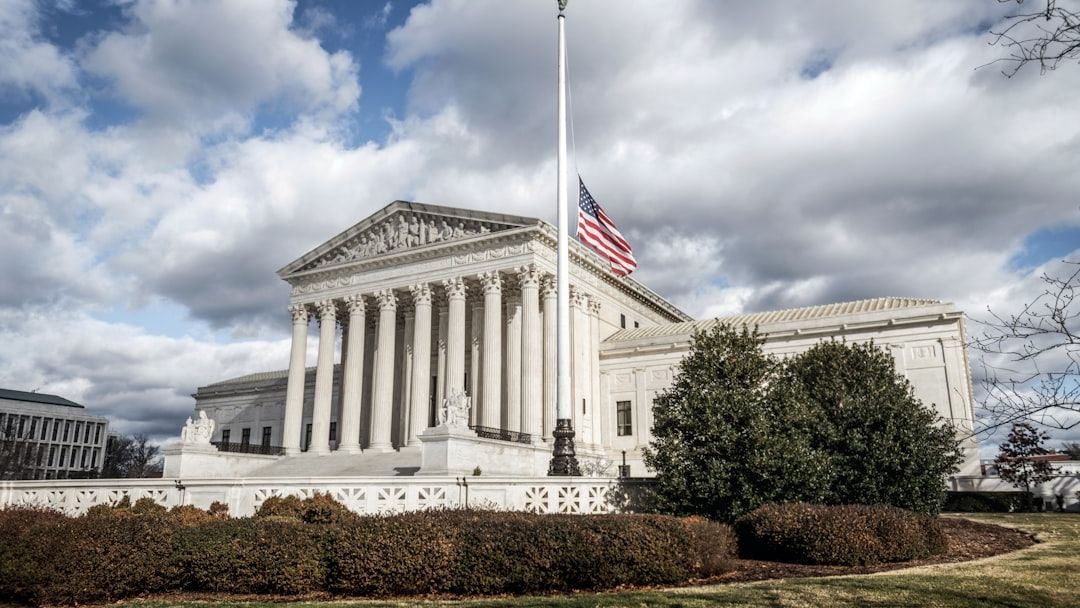
Washington, D.C. – The Supreme Court delivered a 6-3 ruling on April 29 that struck down Louisiana’s congressional redistricting map for relying too heavily on race.[1][2] Justice Samuel Alito authored the majority opinion in Louisiana v. Callais, determining the map violated the Equal Protection Clause of the 14th Amendment.[1] The decision refines how courts evaluate claims under Section 2 of the Voting Rights Act, emphasizing that race cannot predominate in district drawing.
Path to the Supreme Court
Following the 2020 census, Louisiana enacted a congressional map in 2022 with one majority-Black district among its six seats. Black voters challenged this under Section 2 of the Voting Rights Act, arguing it diluted their voting strength. A federal district court and the 5th U.S. Circuit Court of Appeals sided with the challengers, directing the state to produce a new map by early 2024.[1]
Louisiana responded with Senate Bill 8, which established a second majority-Black district. Non-Black voters then filed suit, contending the revisions amounted to racial gerrymandering. A three-judge panel blocked the map’s use, though the Supreme Court paused that order in May 2024 to allow its implementation for the November 2024 elections. The justices took up the case after arguments in March and October 2025.
Majority Tightens Standards
Alito’s opinion held that the Voting Rights Act did not compel Louisiana to add the second majority-minority district, removing any compelling interest to justify racial sorting of voters. The court updated the three-part test from Thornburg v. Gingles, a cornerstone for Section 2 claims since 1986. Plaintiffs now must submit illustrative maps that respect traditional districting criteria, account for partisan effects in racial bloc voting analysis, and demonstrate current intentional discrimination – not just dilution results.[1]
This framework aims to prevent race from overriding other factors like compactness and contiguity. The majority found Louisiana’s map suspect because race predominated in its design, even if intended to remedy prior concerns. Lower courts erred by not applying stricter scrutiny, the justices concluded.
Dissent Warns of Erosion
Justice Elena Kagan dissented, joined by Justices Sonia Sotomayor and Ketanji Brown Jackson. She contended the majority’s requirements effectively neuter Section 2 protections against vote dilution, reimposing barriers Congress removed in 1982 amendments. Proof of intent, tying race to partisanship, and partisan gerrymander tolerance would make successful claims rare, Kagan argued.[1]
The dissent highlighted how the ruling could enable maps that dilute minority votes without remedy, diverging from decades of precedent. Kagan notably omitted “respectfully” from her closing, signaling sharp disagreement.
Immediate and Future Effects
The decision disrupts Louisiana’s current delegation, represented in part by Democrat Cleo Fields in the contested district. States must now navigate redistricting with heightened caution on racial considerations, potentially altering maps nationwide ahead of future cycles.[1]
- Updated Gingles prongs demand more rigorous evidence from Section 2 plaintiffs.
- Race cannot dominate even when addressing dilution claims.
- Partisan influences must be isolated in bloc voting proofs.
Civil rights groups decried the outcome as a setback for minority representation, while others viewed it as a check on racial quotas in politics. Louisiana faces further litigation to redraw compliant boundaries. The ruling underscores ongoing tensions between equal protection and voting rights enforcement.
As redistricting battles persist, this decision sets a firmer boundary on race’s role, reshaping how states balance demographics and district integrity.