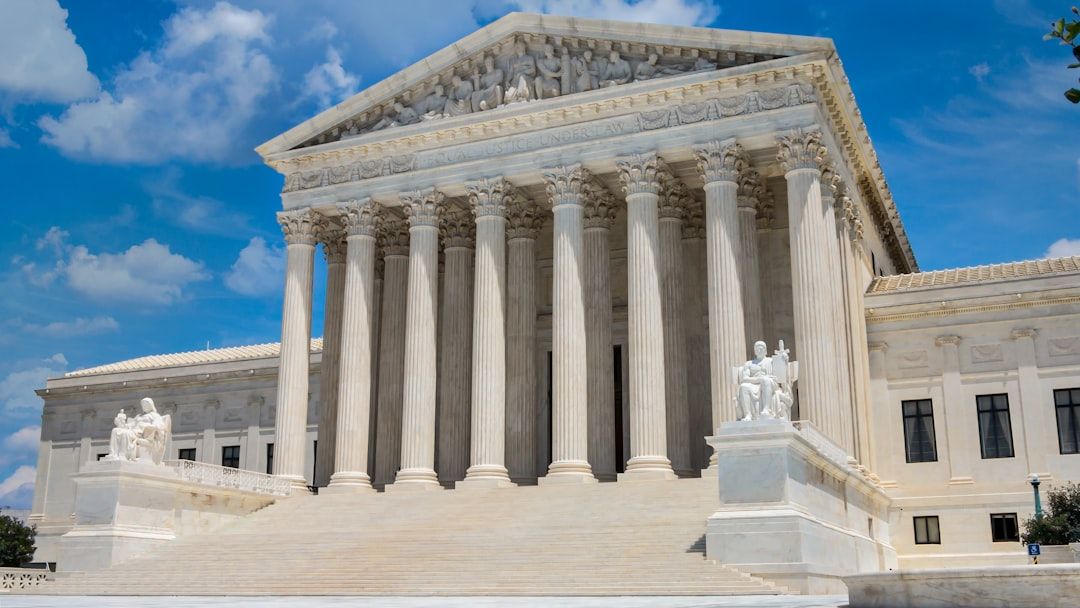
Supreme Court’s Redistricting Decision Is Devastating – Image for illustrative purposes only (Image credits: Unsplash)
Washington — The U.S. Supreme Court delivered a 6-3 ruling on April 29 that invalidated Louisiana’s congressional redistricting plan. Justices found the map’s second majority-Black district violated the Constitution’s equal protection clause by prioritizing race over other factors.[1][2] The decision, penned by Justice Samuel Alito, heightened standards for using race in district drawing even when states aim to comply with federal voting laws.
Louisiana lawmakers had redrawn the map in 2024 following lower court orders. Those courts determined the previous version diluted Black voting power under Section 2 of the Voting Rights Act. Challengers, mostly non-Black voters, argued the new lines snaked excessively to connect minority communities, stretching over 200 miles.[2]
Alito’s Majority Opinion Sets New Bar
Justice Alito wrote that the Constitution permits racial considerations in redistricting only under narrow, compelling circumstances. The court refused to view Voting Rights Act compliance as one such justification. “The Voting Rights Act did not require Louisiana to create an additional majority-minority district,” Alito stated, “no compelling interest justified the State’s use of race.”[1]
The majority revised the longstanding Gingles framework from a 1986 case. Challengers now must demonstrate alternatives that meet state priorities without heavy race reliance. They also need to account for partisanship in voting patterns, given overlaps between race and party in the South. Lower courts had upheld the original dilution claim, but the Supreme Court deemed evidence of intentional discrimination insufficient.[1]
Sharp Dissent Accuses Gutting of Protections
Justice Elena Kagan dissented, joined by Justices Sonia Sotomayor and Ketanji Brown Jackson. She charged the majority with rendering Section 2 “all but a dead letter.” Kagan argued the ruling revived pre-1982 requirements for proving discriminatory intent alongside effects, despite Congress’s explicit shift to results-based tests.[1]
“Today’s decision returns Section 2 to what it was before the 1982 amendment,” Kagan wrote. Justice Clarence Thomas concurred separately, calling Section 2 interpretations an entitlement to proportional representation that strayed from the law’s text. The ideological split highlighted deepening divides on the court’s approach to civil rights era statutes.[1]
Key Changes to Gingles Test:
- Illustrative maps must align with state redistricting goals like protecting incumbents.
- Analysis of minority cohesion and white bloc voting must control for partisanship.
- Proof of “present-day intentional racial discrimination” carries heavy weight.
Reactions Highlight Partisan Divide
Democrats and voting rights groups decried the outcome as devastating. The ACLU called it a “profound betrayal” that leaves minority voters reliant on legislative goodwill. “By gutting Section 2, the Court has weakened the primary legal tool,” said Sophia Lin Lakin of the ACLU Voting Rights Project.[3] House Democrats labeled it a blow to retaking the House, with members like Rep. Terri Sewell fearing their districts’ elimination.[4]
Republicans celebrated. President Trump praised the ruling as aligning with the law’s original intent. A White House spokeswoman termed it a “complete victory for American voters,” emphasizing that skin color should not dictate districts.[2] Southern states eyed swift map revisions, with Florida approving changes hours later.[5]
Ripples for Elections and Beyond
Louisiana now scrambles to redraw lines before upcoming primaries, potentially consolidating Democratic seats. Experts predict losses of up to 70 minority-opportunity districts nationwide, bolstering Republican House control through 2028.[2] The decision affects not just Congress but state legislatures and local races.
Advocates vowed continued fights via legislation like the John Lewis Voting Rights Act and state courts. Still, heightened barriers loom for future challenges. The ruling cements a narrower role for federal oversight in ensuring equitable representation.