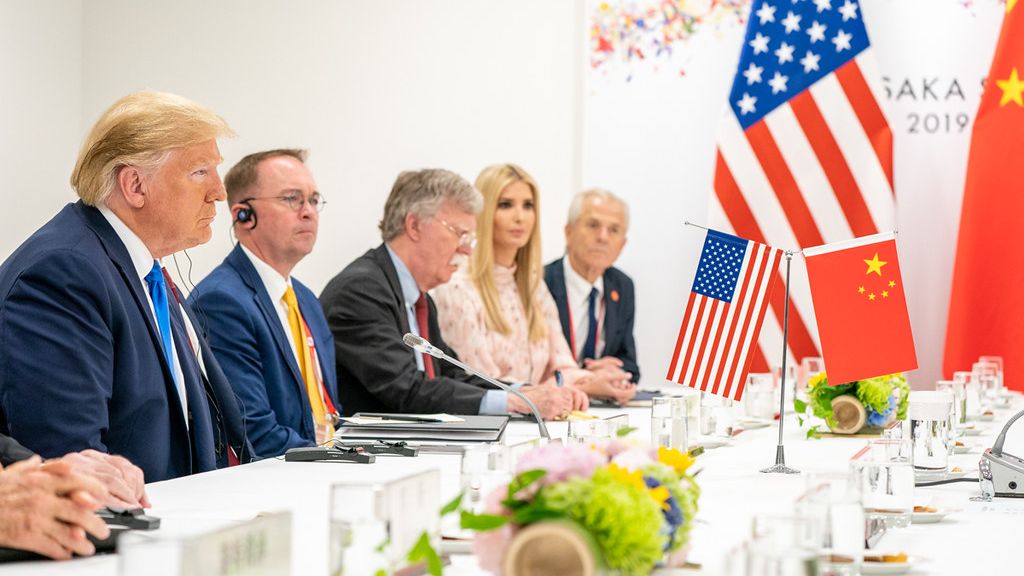
As Trump and Xi Meet in China, American and Chinese People Are Drifting Apart – Image for illustrative purposes only (Image credits: Flickr)
When American and Chinese leaders sit down for talks, the public rituals that once accompanied those meetings have grown noticeably thinner. Earlier encounters often included performances, exhibitions, or symbolic gifts drawn from each nation’s traditions. Those elements have largely disappeared, leaving the proceedings more formal and less personal.
A Shift in How Nations Present Themselves
Diplomatic visits once served as stages for mutual appreciation. American audiences might have seen Chinese opera or calligraphy demonstrations, while Chinese viewers encountered jazz ensembles or regional American crafts. Such displays were intended to humanize the relationship beyond policy disputes.
Today the emphasis rests almost entirely on closed-door discussions and official statements. The absence of these visible cultural markers has not gone unnoticed by observers who recall the warmer tone of prior summits. The change underscores how routine contact between the two societies has become more limited in recent years.
Everyday Connections Grow Harder to Maintain
Ordinary citizens on both sides feel the effects most directly. Students who once planned exchanges or joint research projects now face added layers of paperwork and uncertainty. Families separated by work or study report fewer opportunities for informal travel that once kept personal ties alive.
Business travelers describe similar friction. Where joint industry events or cultural side programs used to create space for casual conversation, schedules now focus narrowly on technical meetings. The result is a narrower set of shared experiences that once helped offset political tensions.
Looking Ahead at What Remains Possible
Even with reduced public gestures, private channels for contact continue to operate. Universities, research institutes, and professional associations still arrange limited programs when conditions allow. These smaller efforts may prove more resilient than large-scale state-sponsored events.
The current pattern suggests that rebuilding broader goodwill will require deliberate steps beyond official summits. Without renewed attention to everyday exchanges, the distance between the two populations risks becoming a lasting feature rather than a temporary phase.