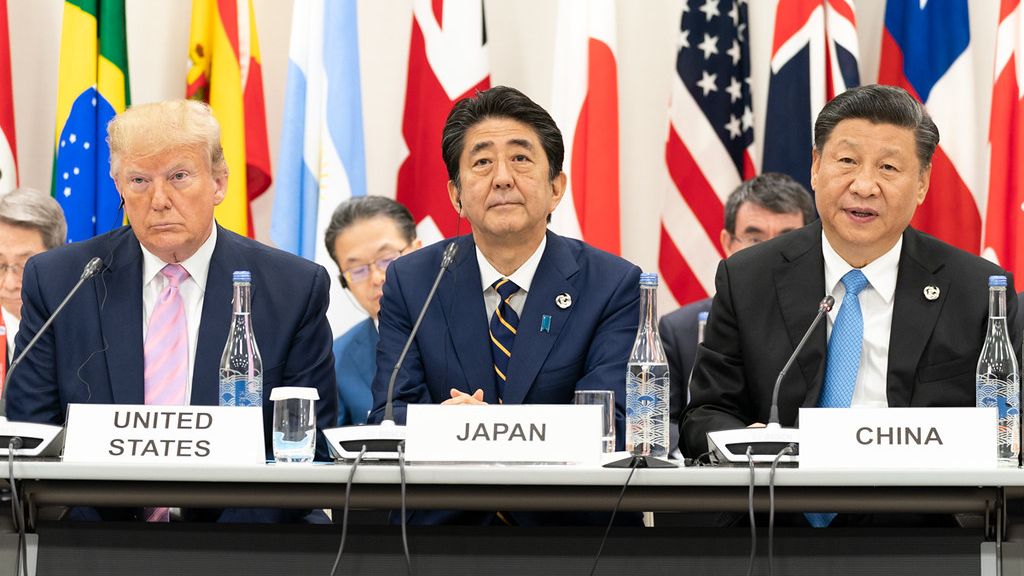
Trump wraps up China visit after talks with Xi on Iran war and trade – Image for illustrative purposes only (Image credits: Flickr)
President Trump has completed his visit to China after a series of meetings with President Xi Jinping. The two leaders addressed trade relations and developments surrounding the conflict in Iran. At the same time, longstanding differences over Taiwan continued to stand out as a point of friction between the two sides.
Scope of the High-Level Discussions
The agenda during the visit included direct exchanges on bilateral trade issues and the evolving situation in Iran. Both leaders reviewed existing agreements and explored areas where cooperation might expand. These conversations took place against a backdrop of ongoing global economic pressures that affect supply chains and investment flows.
Participants from both governments noted that the talks provided an opportunity to clarify positions on several fronts. Trade officials on each side exchanged updates about tariff structures and market access. The Iran-related portion focused on regional stability and its potential effects on energy markets.
Taiwan Remains a Core Point of Friction
Deep differences between the two leaders on Taiwan persisted throughout the visit. The issue surfaced as one of the more challenging topics, with each side maintaining its established stance. This longstanding disagreement has shaped diplomatic exchanges for years and shows no immediate sign of resolution.
Business stakeholders closely monitor such developments because Taiwan plays a central role in global technology and manufacturing sectors. Any escalation in tensions can influence investment decisions and production planning across multiple industries. Government statements after the meetings underscored that the divide on this matter continues to require careful management.
Practical Effects on Trade and Stakeholders
Companies involved in cross-border commerce between the United States and China face continued uncertainty stemming from the unresolved Taiwan question. Supply-chain managers must account for potential disruptions when setting long-term contracts and inventory levels. Investors in sectors such as semiconductors and electronics remain attentive to any shifts in official rhetoric.
The recent discussions on trade and Iran offered some clarity on those specific fronts, yet the Taiwan dimension adds a layer of complexity. Policymakers in both capitals now face the task of balancing economic cooperation with security concerns. Affected parties include manufacturers, logistics firms, and financial institutions that operate across the Pacific.
Key points from the visit:
- Trade and Iran topics received focused attention during the meetings.
- Taiwan differences showed no signs of narrowing.
- Business sectors tied to technology and manufacturing continue to track developments closely.
The conclusion of the visit leaves several open questions for future diplomatic engagement. Both governments have indicated they will maintain channels of communication on the issues discussed. Observers expect additional rounds of talks in the coming months as economic and security priorities evolve.