Most people don’t think about their retirement plan until they’re forced to. A birthday hits. A colleague announces they’re retiring early. Or maybe you glance at your account balance and feel a quiet wave of panic. Whatever the trigger, the truth is hard to ignore: the rules of retirement have changed dramatically in recent years, and many Americans are still playing by an outdated rulebook. What you knew about saving, Social Security, and healthcare costs in 2015 is simply not enough anymore. Let’s dive in.
The Savings Gap Is Bigger Than You Think

Here’s a number that should stop you in your tracks. According to the Federal Reserve Survey of Consumer Finances from 2023, the average retirement savings for U.S. households sits at around $333,940. Sounds decent, right? Look closer. The median savings, which is a far more honest reflection of where most people actually stand, is only around $87,000.
That gap between average and median tells you everything. A relatively small number of wealthy households are pulling the average way up, masking the reality for tens of millions of working Americans. Retiring comfortably is a common goal for many working Americans, but a majority say they’re behind on their retirement savings, with about three in five American workers reporting their savings are behind where they should be.
Of those who feel behind, roughly a third say they’re significantly off track, while about one in five say they’re slightly behind. These overall figures have remained stubbornly similar across 2023, 2024, and 2025 surveys. That consistency is not reassuring. It tells us the problem isn’t temporary. It’s structural.
How Much Do You Actually Need?

Let’s be real about the numbers people are throwing around. According to Fidelity’s 2024 retirement analysis, Americans should aim to save roughly ten to twelve times their final salary by the time they retire, just to maintain their current lifestyle. Think about that for a moment. If you’re earning $80,000 a year, you’re looking at a target somewhere between $800,000 and nearly $1 million.
More than half of Americans believe outliving their life savings is a real possibility, and the vast majority are living with financial anxiety. That fear is well founded. Among Americans who do have retirement savings, one in four say they have just one year or less of their current annual income put aside. One year. That’s not a retirement fund. That’s an emergency fund that happens to be in a retirement account.
The amount needed to accumulate $1.26 million by age 65 depends heavily on when you start saving. Starting at age 20 requires around $330 per month, but starting at age 30 jumps to $695 per month. People who wait until age 40 need to save $1,547 per month, and those who delay to age 50 must set aside nearly $4,000 per month. The math doesn’t lie. Time is not your friend if you’re procrastinating.
Inflation Has Already Eaten Part of Your Retirement

Inflation is not just a news headline. It’s a slow, silent thief working directly against your retirement savings. The U.S. Consumer Price Index rose about 4.1% in 2023, according to the U.S. Bureau of Labor Statistics, pushing up the cost of healthcare, housing, and daily essentials. Even as inflation moderated to roughly 3% in 2024, the cumulative effect over several years has been significant and lasting.
Inflation is a key concern for retirement planning, with nearly eight in ten Americans worried about its ongoing impact on their retirement savings. That worry is rational. When prices rise faster than your savings grow, you’re effectively losing ground every single year, even when your account balance looks like it’s increasing.
The cost of basic needs has increased dramatically since 2000, outpacing median wage growth by a wide margin. As the cost of housing, childcare, education, and healthcare has grown, it has narrowed the gap between income and expenses, leaving little room to save for retirement. As this gap closes and discretionary income shrinks, many wonder how they will ever afford life in retirement.
Social Security Is on the Clock

Many Americans are counting on Social Security to carry a heavy portion of their retirement burden. More than half of Americans who haven’t yet retired expect to rely on Social Security benefits to pay necessary expenses, and the majority of already-retired Americans are reliant on Social Security to cover basic costs. That’s a lot of eggs in one basket.
Here’s where it gets uncomfortable. If Congress does not act, combined trust fund reserves are currently projected to become depleted in 2034, at which point there would be sufficient income coming in to pay only 81 percent of scheduled benefits. That’s roughly an almost one fifth cut to benefits you’ve been counting on. And it’s only about nine years away.
The trustees estimate that if policymakers take no further action, Social Security’s combined trust fund reserves will be depleted in 2034, which is one year earlier than projected in last year’s report and the closest the funds have come to reserve depletion since the early 1980s. More than three quarters of both non-retired and retired adults say they are concerned that promised benefits will not be paid to them, up from 2024 figures. The anxiety is spreading fast.
The Healthcare Bill Nobody Warned You About

Honestly, this one surprises a lot of people. Healthcare isn’t just a retirement expense. For many retirees, it becomes the retirement expense. According to the Fidelity Retiree Health Care Cost Estimate from 2024, a 65-year-old couple retiring in 2024 may need approximately $315,000 just to cover healthcare costs throughout their retirement. That figure doesn’t include long-term care or nursing home expenses.
Think about that figure another way. If the median American household has around $87,000 saved, healthcare costs alone could wipe out that entire balance more than three times over. The cost of major life events is taking up a larger percentage of household income, a trend that affects workers at the lowest income levels as well as the highest.
Medicare helps, but it doesn’t cover everything. Premiums, deductibles, co-pays, dental, vision, and hearing costs can add up with stunning speed. Planning for healthcare is no longer optional in a proper retirement strategy. It deserves its own dedicated budget line.
Longevity Is Changing the Entire Equation

Here’s something worth sitting with. U.S. life expectancy reached about 77.5 years in 2023, recovering after pandemic-related declines, according to the U.S. Centers for Disease Control and Prevention. That means someone retiring at 65 today could realistically need to fund two full decades of retirement living, possibly three. That changes everything about how you should be thinking and saving.
In 2025 alone, a record-setting 4.2 million Americans will turn 65, the conventional retirement age. That wave of new retirees is hitting a system that is already under pressure, from Social Security’s finances to healthcare infrastructure to housing markets. This isn’t a distant trend. It’s happening now.
On the global stage, the United Nations World Population Prospects projects that the global population aged 65 and older will double to around 1.6 billion by 2050. That demographic shift is already reshaping pension systems in countries across Europe and Asia. The U.S. is not immune to these same pressures. Longer lives are wonderful, but they require a fundamentally different retirement savings mindset.
Your 401(k) Limits Just Got Better – Are You Using Them?

There is actually some genuinely good news here. The IRS raised the 401(k) contribution limit to $23,000 in 2024, with an additional $7,500 catch-up contribution available for people age 50 or older, according to the Internal Revenue Service. These aren’t just small adjustments. Used consistently, they can meaningfully compound retirement wealth over time.
The SECURE 2.0 Act continues to reshape retirement savings, offering new opportunities to strengthen financial futures, including a higher required minimum distribution age and expanded eligibility for 401(k) plans, making it easier for part-time workers to participate. Catch-up contributions also increased in 2025 for 401(k) and other plan holders for employees between the ages of 60 and 63.
Among the provisions in the SECURE 2.0 Act is a requirement that most 401(k) plans established after 2022 auto-enroll new employees and auto-escalate their contribution rate beginning in 2025. That auto-escalation feature is quietly powerful. It nudges people to save more as their income grows, without requiring them to remember to make the adjustment themselves.
The Confidence Collapse Among Retirees

What might be the most alarming trend of all isn’t about numbers. It’s about mindset. Confidence among those already in retirement has hit an all-time low, with only 27 percent feeling financially prepared, down dramatically from 43 percent only five years ago in 2020. People who have already retired are less confident than they’ve been in at least a generation.
Roughly two thirds of retirement plan participants say it is difficult to know how their retirement savings will translate into monthly retirement income, and the same number worry about outliving their retirement savings, significantly more than in 2024. That’s a staggering number. Two thirds of people with retirement accounts are still unsure how their savings actually convert into day-to-day income.
Among retirees who do not have labor income, those who have a source of private income such as a pension or investment income fare considerably better financially than those without any private income. In other words, Social Security alone is not enough. Diversified income in retirement is the difference between comfortable and struggling.
Generation Gaps in Retirement Readiness

It’s not one-size-fits-all. Different generations are facing the retirement challenge from very different starting positions. While roughly 55 percent of Baby Boomers feel prepared for retirement, only about one in three Gen Z adults feel the same. According to Empower Personal Dashboard data as of March 2025, the average retirement balance for Baby Boomers was $1.5 million, compared to $942,000 for Gen X and $618,000 across all Americans.
For Gen X members, many of whom are approaching their retirement years, roughly half say they have saved up to three times their current annual income. Yet the majority believe they will not be financially prepared for retirement when the time comes. That’s a quiet crisis hiding right in the middle of the workforce. Gen X is too close to retirement to have decades of compound growth ahead, and too far from it to rely on existing savings alone.
Younger adults, as well as Black and Hispanic adults, are less likely than others to have tax-preferred retirement accounts or defined benefit pensions, and are also less likely to view their retirement savings plan as on track. Closing these gaps isn’t just a personal finance matter. It’s a broad societal challenge that will shape economic security for millions.
What an Updated Retirement Plan Actually Looks Like
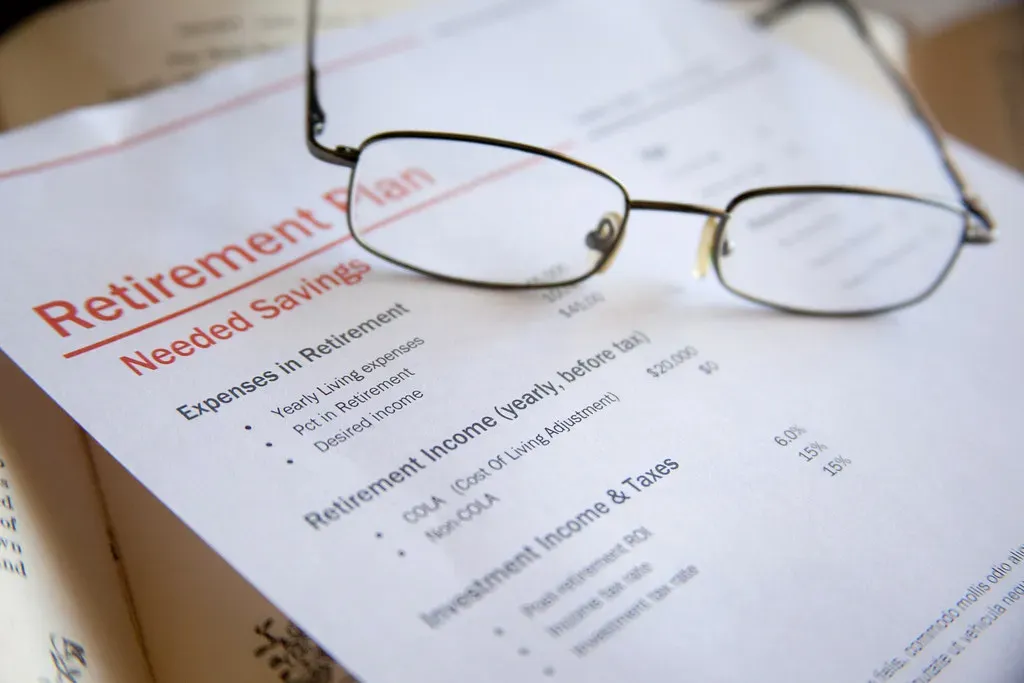
Updating your retirement plan isn’t about panicking. It’s about being honest. The first step is a simple inventory. How much do you have saved? How much will you realistically need? And how wide is that gap? From there, the strategies are clearer than most people expect. Maximize your 401(k) contributions. Use catch-up contributions if you’re over 50. Diversify income sources so you’re not entirely dependent on Social Security.
Individuals can prioritize early retirement savings, diversify investments, and explore passive income opportunities to supplement Social Security. Think of your retirement income like a three-legged stool. Social Security is one leg, personal savings and investments are another, and supplemental income or part-time work is the third. Remove any one of those legs, and the whole structure becomes unstable.
Nine in ten retirement plan participants say they would find it helpful to receive guaranteed income in retirement, and the same number say it would be helpful if their employer provided secure income-generating options. Retirees echo this sentiment, with roughly nine in ten saying an employer should help employees secure a guaranteed income stream through retirement. The demand for more structured, reliable retirement income solutions is overwhelming. If your plan doesn’t address income security, it’s time for a serious conversation with a financial advisor.
Retirement planning in 2026 is not what it was a decade ago. Longer lives, rising healthcare costs, a Social Security system under pressure, and persistent inflation have all raised the bar considerably. The good news is that the tools to respond to these challenges, from improved contribution limits to the SECURE 2.0 Act’s expanded options, are available to more people than ever before. The only question is whether you’ll use them. What would you do differently if you started updating your retirement plan today?