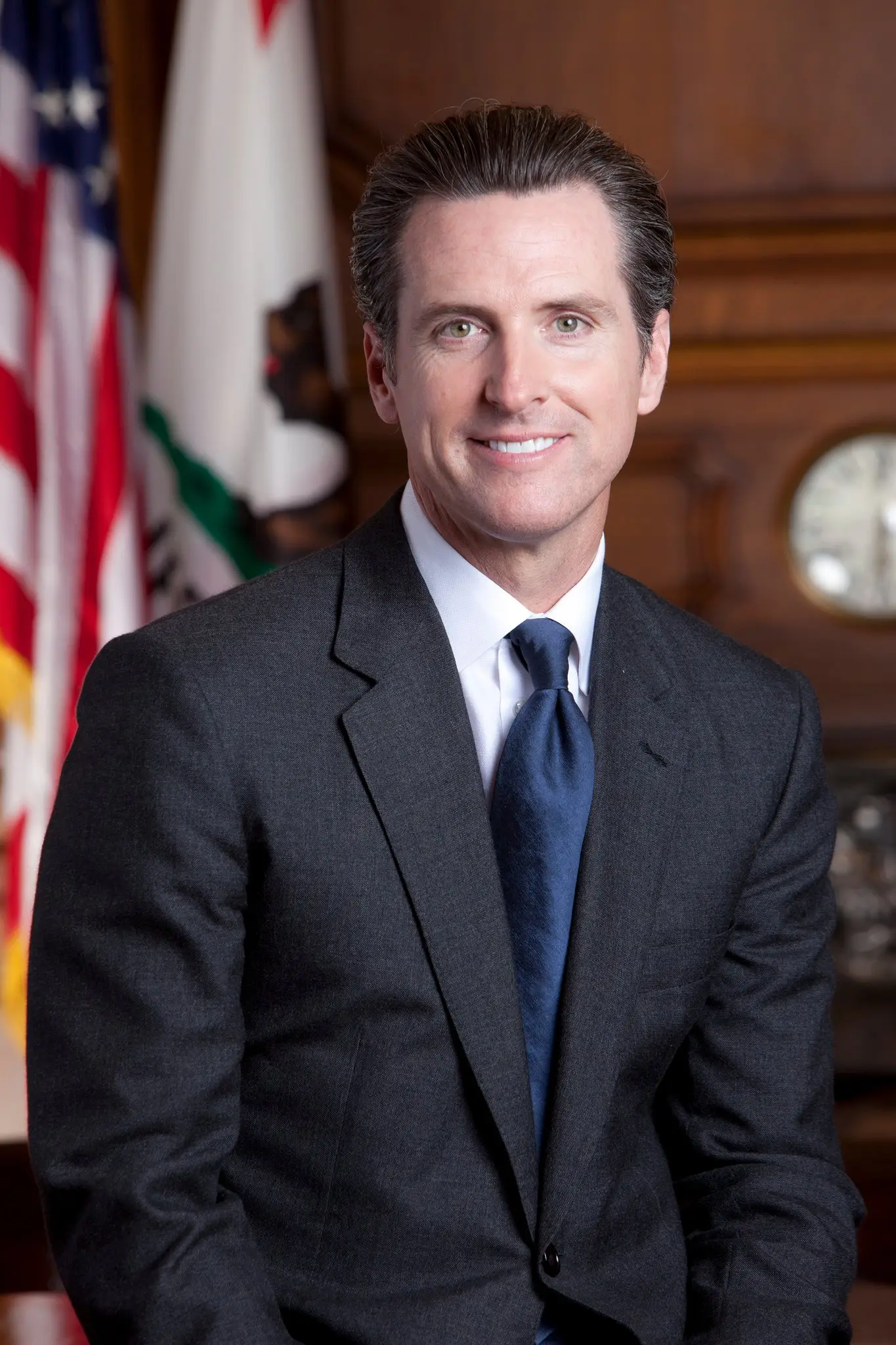
Refusing a Passive Role (Image Credits: Upload.wikimedia.org)
California – Governor Gavin Newsom crisscrossed the country in recent weeks, rallying Democrats and signaling his intent to shape the party’s future beyond Sacramento.
Refusing a Passive Role
Newsom positioned himself firmly against political inaction during a stop in Manning, South Carolina. He emphasized the need for Democrats to engage everywhere.[1] “I think it’s really important for the Democratic Party not to give up on red states and rural parts of the country,” he stated at an event hosted by local Democrats.[1]
His travels coincided with the promotion of his memoir, Young Man in a Hurry, which details personal struggles like dyslexia and early career challenges. The book tour drew attention as a testing ground for broader appeal. Newsom engaged audiences on his evolution from San Francisco entrepreneur to national figure. Critics within his party questioned his podcast appearances with conservatives like Steve Bannon, yet he defended the outreach. This approach aimed to bridge divides in a polarized landscape.
Fighting Fire with Trump’s Tactics
Newsom emerged as a vocal opponent to President Donald Trump, adopting an aggressive posture. He described his strategy bluntly: “I’m putting a mirror up to President Trump and I’m fighting fire with fire and I am punching a bully back in the mouth.”[1] Social media posts mocked Trump’s style, amplifying his reach to millions.
Throughout 2025, Newsom led efforts like lawsuits against federal actions and Proposition 50, a redistricting measure that countered Republican gains.[2] These moves boosted his profile amid California’s economic and social challenges. He coordinated responses to wildfires and advanced policies on housing, homelessness, and clean energy. Approval ratings climbed as he balanced progressive priorities with pragmatic vetoes, such as on certain AI regulations.
2028 Speculation and Personal Stakes
Speculation swirled around a potential 2028 presidential bid as Newsom entered his lame-duck year. Polls placed him alongside Kamala Harris as a top contender.[2] He addressed a possible matchup with Harris during a CNN interview, noting geographical and political distances. “Well, I’m San Francisco now, she’s LA. So there’s a little distance between the two of us. You know, fate will determine that,” he remarked.[3]
Family weighed heavily in his deliberations. One son expressed reluctance via text, urging more time at home: “Dad, are you running (for) president?… you can’t…. I’m too young. You need to spend more time with us.”[3] Newsom acknowledged the emotional pull, stressing family involvement in any decision. His podcast and book served as platforms to refine messaging for a national audience.
Building a Broader Coalition
Newsom’s playbook included unlikely dialogues. Conversations with right-wing commentators tested his ability to appeal beyond coastal liberals.[2] He studied conservative media to anticipate shifts, applying an entrepreneurial mindset to governance.
- Expanded Medi-Cal coverage to nearly all residents before adjustments.
- Reformed homelessness initiatives with grants and conservatorships.
- Preserved nuclear power for energy reliability.
- Invested in migrant services while deporting criminals.
- Promoted housing density through zoning changes.
These efforts underscored his focus on results over ideology. Recent appointments to boards on energy, cybersecurity, and veterans affairs highlighted ongoing state leadership.[4]
Key Takeaways
- Newsom prioritizes Democratic engagement in unlikely areas.
- His anti-Trump rhetoric mirrors the president’s intensity.
- Family and fate guide presidential considerations.
Newsom’s trajectory suggests a pivotal Democratic voice post-2026. His blend of defiance and outreach positions him uniquely for influence. What role do you see him playing next? Tell us in the comments.