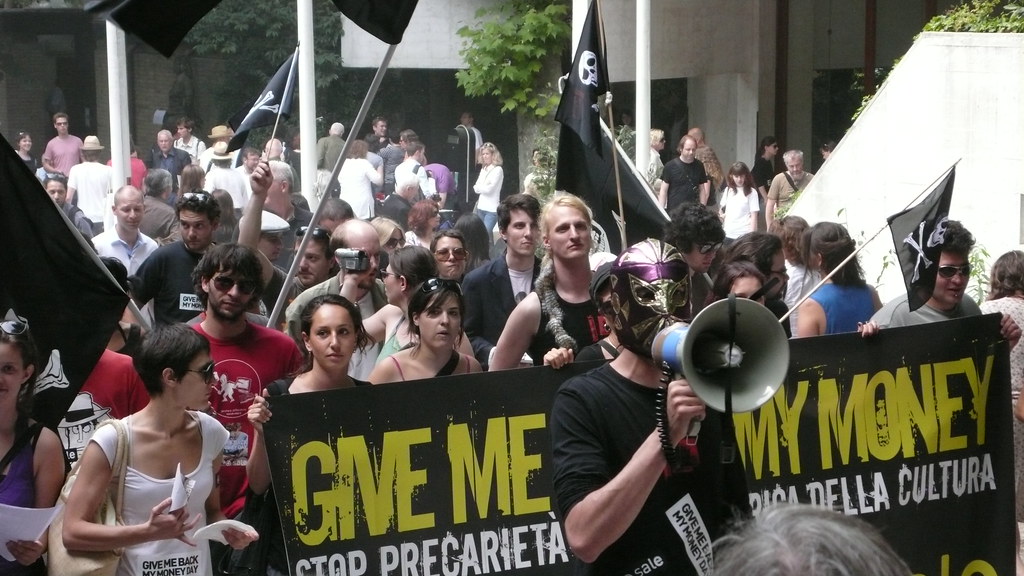
Artists’ Strike Closes Pavilions at Venice Biennale, Adding to Upheaval – Image for illustrative purposes only (Image credits: Flickr)
Venice – Several of the most prominent exhibitions at the Venice Biennale stood empty on Friday after artists closed their pavilions in a coordinated pro-Palestinian demonstration. The action affected some of the event’s highest-profile displays and added fresh disruption to an edition already marked by tension. Organizers faced immediate questions about how long the closures would last and what it meant for the remainder of the show.
The Demonstration Unfolds
Artists chose Friday to stage the protest, drawing on the Biennale’s global visibility to highlight their cause. Pavilions that normally attract steady crowds remained shuttered throughout the day. The move was described as a direct response to ongoing events in the Middle East, with participants framing the closures as a form of solidarity.
Disruption Spreads Across the Grounds
Visitors arriving at the Arsenale and Giardini sites encountered locked doors and posted notices explaining the closures. Staff members redirected crowds to unaffected areas, yet the absence of several headline installations left noticeable gaps in the usual flow of the exhibition. Organizers worked to maintain other programming while assessing the scale of the protest and its potential to continue into the weekend. The sudden halt also complicated scheduled tours, press events, and private viewings that had been planned weeks in advance. Some national pavilions operated normally, creating an uneven experience for attendees who had traveled specifically to see the full roster of works. The contrast between open and closed spaces underscored how quickly the demonstration altered the daily rhythm of the Biennale.
Part of a Wider Pattern
The Friday action fits into a series of similar protests that have surfaced at major cultural institutions in recent months. Biennale officials have so far avoided public confrontation, choosing instead to monitor developments and communicate directly with participating artists. The episode highlights the growing intersection between contemporary art events and political activism, a dynamic that has tested organizers at previous editions as well.
Whether the pavilions reopen in the coming days remains unclear, though both sides have signaled willingness to continue dialogue. The episode leaves the Biennale navigating familiar territory: balancing artistic freedom with the practical demands of running a large-scale international exhibition.