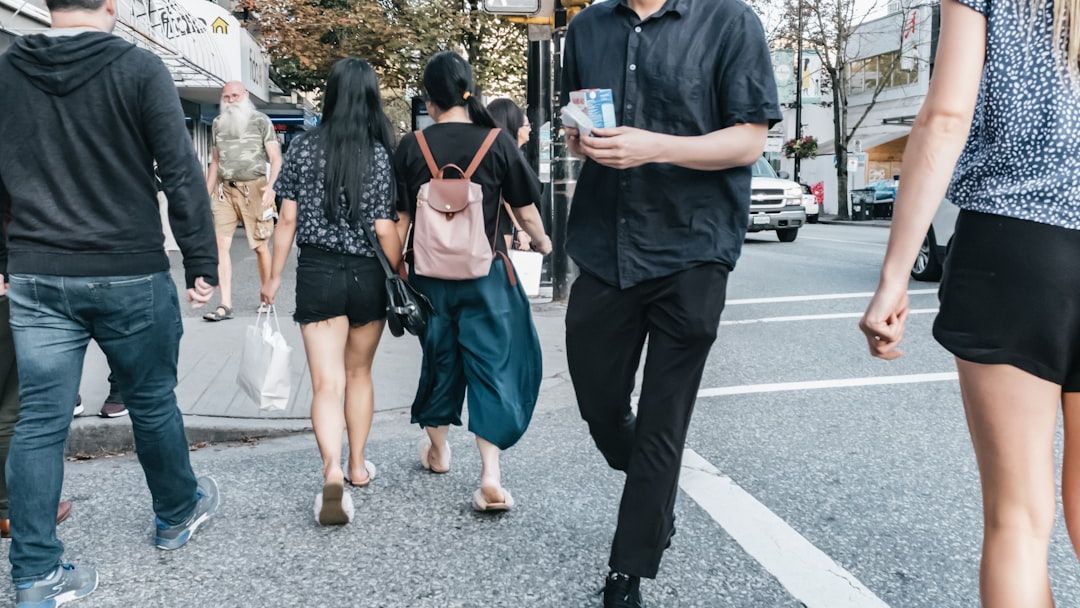
These routes were made for walking: Organizers promote pedestrian access to World Cup games – Image for illustrative purposes only (Image credits: Unsplash)
Vancouver – Organizers of the FIFA World Cup matches at B.C. Place have made pedestrian access the centerpiece of their game-day plan, directing spectators to leave vehicles behind and follow designated walking routes. The approach aims to manage large crowds efficiently while reducing congestion around the downtown stadium. Even visitors staying at hotels directly across from the venue will need to walk several blocks to reach the main entry point on the east side.
Designated Path Forces Detour for Many Spectators
The primary route, known as the Last Mile, runs from Main Street SkyTrain Station directly to B.C. Place and will serve as the main entry for ticket holders on match days. B.C. Place general manager Chris May confirmed that regular access points will close to ordinary fans, pushing everyone toward the Concord lands near Science World. This setup applies regardless of proximity, meaning guests at the Hampton Inn across from Terry Fox Plaza must still travel east to join the flow.
No bicycle or electric scooter parking will be available at the stadium itself. Organizers instead plan a free bike valet service with concierge support at the Main Street station for both personal and shared bikes and e-scooters. The Vancouver FIFA committee has promoted the same walking connections from downtown and nearby neighborhoods, advising fans to follow signs or look for the large Trionada ball landmark at Science World when unsure.
Transit and Accessibility Options Take Center Stage
Main Street station will function as the central hub for transit riders, taxis, and ride-share drop-offs. Officials emphasized repeated use of the “know-before-you-go” message during a news conference at the 29th Street SkyTrain Station, covering everything from routes to bag rules. Vancouver FIFA committee COO Taunya Geelhoed highlighted the creation of pedestrianized paths to guide crowds safely from surrounding areas.
Special provisions exist for disabled fans, including a pickup and drop-off zone on westbound Expo Boulevard for HandyDART and designated accessible taxis. Two additional accessible loading zones will operate on eastbound Keefer Street between Taylor and Carrall, and westbound Nelson Street between Pacific and Expo. All users must display a valid SPARC B.C. permit or recognized equivalent.
Strict Bag Rules and Security Preparations
Bag policies will be tightly enforced at B.C. Place. No bags larger than 30 by 30 centimetres are permitted, and all must be clear except for small clutch purses under 16.5 by 11 centimetres. Clear, flexible plastic water bottles smaller than one litre remain the only exception to the liquid ban.
Security will see a significant surge of officers from Vancouver police, the RCMP, and departments across the Lower Mainland and Alberta. VPD Deputy Chief Don Chapman noted that staffing levels will vary by game and day, with peaks expected during the Round of 32 on July 2 and the Round of 16 on July 7. The operations centre will monitor drone and surveillance footage throughout the tournament.
Budget Updates and Hotel Demand Outlook
Committee head Jessie Adcock deferred detailed budget questions at the news conference, stating that an updated figure would be released in the coming weeks once all match times and participating teams are confirmed. The previous estimate stood at $624 million. Adcock stressed that ticket sales remain strong, with most matches nearly sold out and additional last-minute purchases expected.
Despite reports from some U.S. host cities of softer hotel demand, Vancouver organizers project full capacity. Adcock noted that the city’s appeal as a destination, combined with the absence of certain international barriers seen elsewhere, supports healthy visitor numbers. The B.C. Hotel Association previously reported that FIFA had cancelled more than 70 percent of its initial room blocks, yet local forecasts still anticipate sufficient supply for the summer events.
Police will coordinate with organizers on any planned fan marches while protecting the right to lawful protests. Vancouver’s head of safety and security for FIFA, Dave Jones, said the department handles roughly 1,000 protests annually and will apply the same measured approach to unsanctioned gatherings. The overall strategy reflects a deliberate effort to balance safety, accessibility, and the excitement of hosting the world’s largest sporting event.