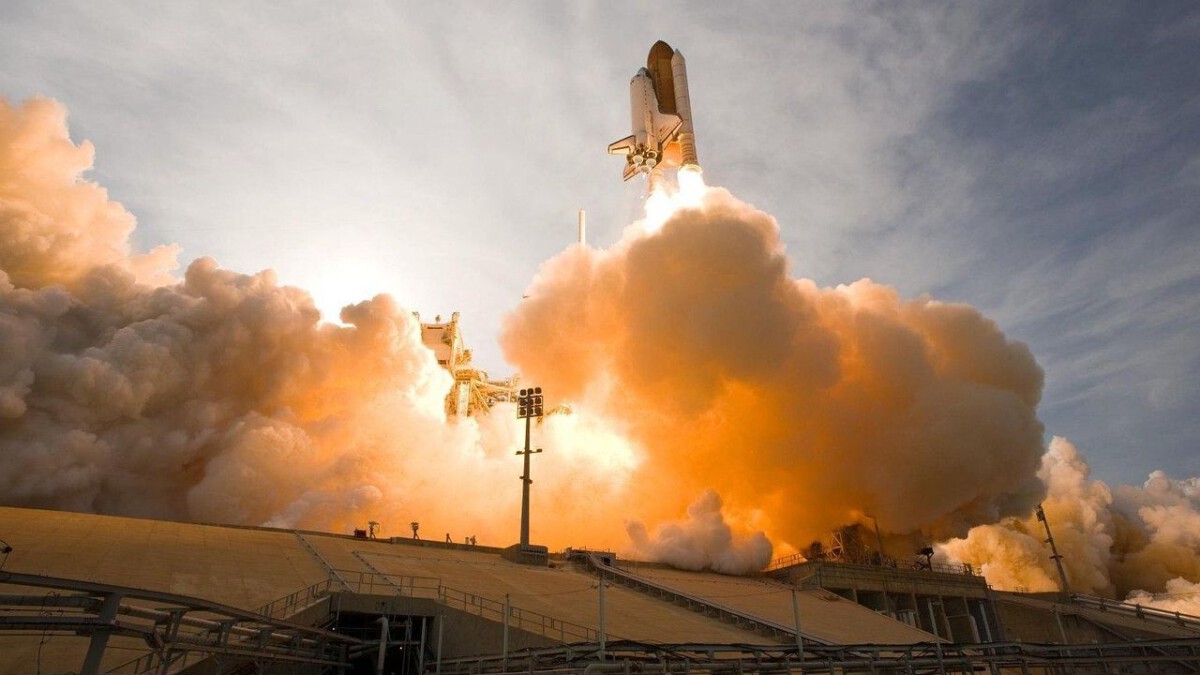
Skyroot Aerospace becomes unicorn after raising $60 million ahead of Vikram-1 launch – Image for illustrative purposes only (Image credits: Pixabay)
Hyderabad – Skyroot Aerospace secured nearly $60 million in fresh funding, propelling its valuation to $1.1 billion and establishing it as India’s first space technology unicorn.[1][2] The Hyderabad-based startup prepares for the maiden flight of Vikram-1, its orbital-class rocket designed to deliver small satellites into space. This investment arrives at a pivotal moment, underscoring growing global confidence in India’s private space ambitions.
A Strategic Funding Round
The latest round drew co-lead investments from Sherpalo Ventures, founded by Ram Shriram – an early Google backer and Alphabet board member – and Singapore’s GIC. Existing supporters such as the Greenko Group founders and Arkam Ventures participated alongside newcomers including BlackRock-managed funds, Playbook Partners, and the Shanghvi Family Office.[1][3] Ram Shriram will join Skyroot’s board, signaling deep commitment to the venture.
Skyroot’s total funding now exceeds $160 million, building on prior rounds like a $51 million Series B in 2022 led by GIC and a $27.5 million pre-Series C in 2023 backed by Temasek.[3] The valuation has more than doubled since 2023’s $519 million mark. Pawan Kumar Chandana, co-founder and CEO, highlighted the backing: “This investment signals confidence from some of the world’s most reputed investors in Skyroot.”[1]
Vikram-1: Poised for Orbital Debut
Vikram-1 represents India’s first privately developed orbital launch vehicle, capable of deploying up to 350 kilograms into low Earth orbit or 260 kilograms into sun-synchronous orbit.[4][2] The rocket features an all-carbon composite structure, solid fuel boosters from the Kalam series, and 3D-printed liquid engines from the Raman series. Hardware has been flagged off to Sriharikota’s Satish Dhawan Space Centre, with final integration and testing underway.
The company targets a launch window in June, pending regulatory approvals, carrying Earth observation satellites and in-orbit experiments from domestic and international clients.[3] Chandana noted recently, “We have completed the most critical integrated testing of the rocket and are now sending hardware to Sriharikota in phases.”[3] This mission promises a flight duration of about 15 minutes, placing payloads above 400 kilometers.
From Suborbital Success to Broader Horizons
Skyroot, founded in 2018 by former ISRO scientists Pawan Kumar Chandana and Naga Bharath Daka, marked its entry with the Vikram-S suborbital rocket in November 2022. That launch from Sriharikota became India’s first by a private entity to reach space, validating the company’s propulsion technologies.[5][4] The firm operates from expansive campuses in Hyderabad, spanning 250,000 square feet, where it develops solid, liquid, and cryogenic engines.
Past milestones include debt financing of Rs 100 crore from BlackRock earlier this year. These steps have positioned Skyroot to compete globally with firms like Rocket Lab and SpaceX in the small satellite market, emphasizing cost-effective, on-demand launches.[3]
Investing in Scale and Innovation
The new capital targets multiple fronts: ramping up Vikram-1 launch frequency, expanding manufacturing at its Max-Q and Infinity facilities, and advancing Vikram-2.[2] Vikram-2, slated for 2027, will handle up to one tonne in low Earth orbit using an advanced cryogenic stage from the Dhawan series, broadening mission profiles.
- High-cadence Vikram-1 operations for dedicated and rideshare missions.
- Scaled production of carbon composite structures and engines.
- Team expansion and infrastructure growth.
- Vikram-2 development for heavier payloads.
Ram Shriram praised the progress: “Skyroot is building the foundational infrastructure for [access to space] with the best cost-to-performance ratio in the orbital-launch industry.”[1] Chandana echoed enthusiasm for the Vikram-1 milestone, vital for India and the global sector.
Shaping India’s Private Space Future
Skyroot’s unicorn status arrives amid a booming Indian space economy, fueled by policy reforms and rising satellite demand. The company aims to deliver customizable orbital insertions, filling gaps for small satellite operators worldwide. As Vikram-1 approaches liftoff, it tests not just hardware but the viability of private innovation in a field long dominated by government agencies.
Success here could accelerate a wave of commercial launches from India, lowering barriers to space and fostering new applications from Earth observation to communications. Skyroot’s trajectory suggests the nation’s space sector stands ready to claim a larger global share.