DoorDash: Building A Delivery Behemoth – Image for illustrative purposes only (Image credits: Pixabay)
In the competitive arena of food delivery, DoorDash has emerged as the undisputed leader, boasting a market capitalization of $85 billion and commanding around 60% of the U.S. restaurant delivery market.[1] Cofounder and CEO Tony Xu demonstrated the company’s edge firsthand during a delivery shift in San Francisco, highlighting the meticulous algorithms and mapping tools that optimize every aspect of the process. This focus on the “last 100 feet” has propelled DoorDash far ahead of rivals like Uber Eats and Grubhub. The company’s trajectory offers lessons in resilience and innovation amid fierce rivalry.
From Stanford Experiment to Near Collapse
DoorDash began as a project among Stanford students in 2012, with Tony Xu and cofounders Stanley Tang and Andy Fang launching the service a year later. The early days tested their resolve profoundly. During a Stanford football game in fall 2013, overwhelming orders led to widespread delays, forcing the team to refund customers at a cost of 40% of their bank balance, leaving less than $30,000.[1] They followed up by baking and distributing cookies as an apology, embedding customer obsession into the company’s DNA.
The startup faced a crowded field. Competitors like Postmates, Caviar, Munchery, SpoonRocket, Maple, and Sprig vied for dominance, while established players Grubhub and Seamless had merged that year. Unlike platforms reliant on restaurants’ own delivery staff, DoorDash pioneered a gig worker model inspired by Uber and Taskrabbit, slashing overhead and expanding reach dramatically.[1]
Mastering Operations Through Data and Detail
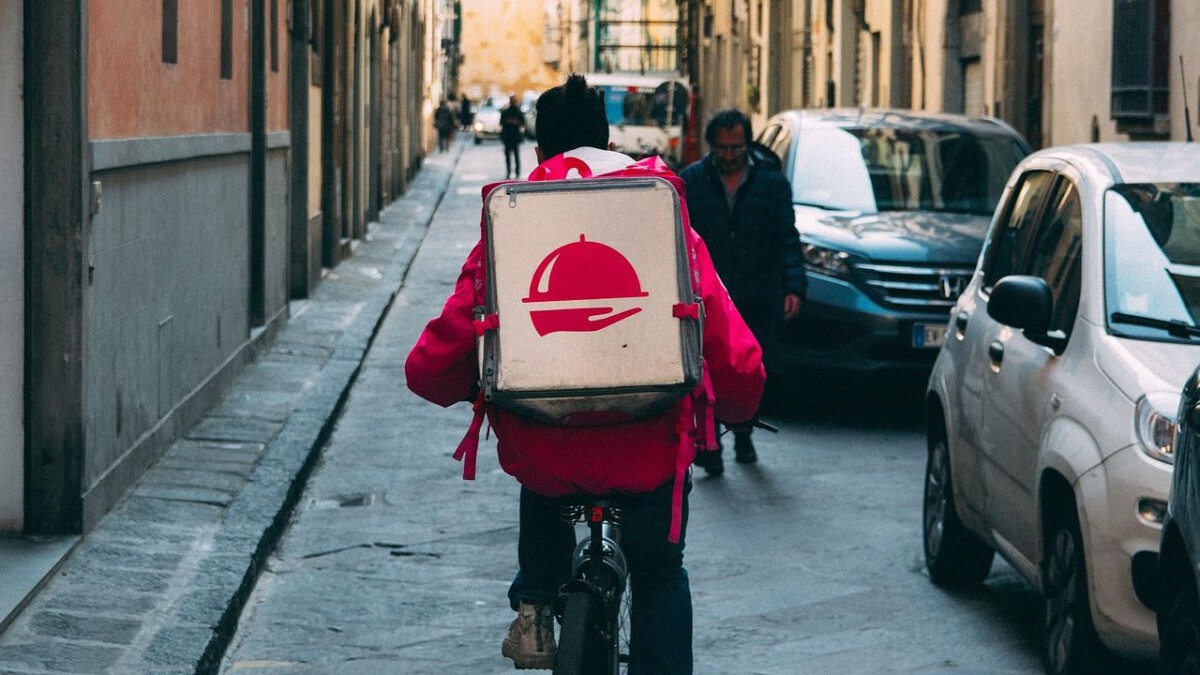
DoorDash’s ascent hinged on hyper-optimized technology. During Xu’s demo shift, he showcased features like algorithm-driven order unassignment to avoid delays, dessert prioritization to prevent oversights, and in-house mapping for precise parking and entrance guidance.[1] These tweaks, saving mere seconds per delivery, compound into a decisive advantage. “With all of this data, we are trying to build the catalog for the physical world,” Xu explained. “This repository of information does not exist on Google Maps. It doesn’t exist on ChatGPT.”[1]
All U.S. salaried employees complete four Dasher shifts annually, fostering firsthand insight. This culture of continuous refinement underscores Xu’s philosophy: “If you’re in technology and you are not making improvements, you are actually decaying.”[1] The approach targets not just the last mile but the final 100 feet, positioning DoorDash to redefine logistics.
Outpacing Rivals in a Brutal Market
DoorDash now projects over $13 billion in 2025 revenue, more than double Uber Eats and far surpassing Grubhub’s under 10% share.[1] Early aggressions included market-share grabs through incentives, though cutthroat tactics marked the sector. Meta CEO Mark Zuckerberg, who serves with Xu on his board, praised the leader’s realism: “There’s a lot of people in the Valley who talk about big ideas that in the abstract seem appealing, but in practice have all these nuances that don’t quite work out.”[1]
Grubhub’s decline from dominance illustrates the stakes. DoorDash’s on-demand Dasher network proved scalable, enabling rapid expansion into suburbs and beyond restaurants.[1] Yet Xu remains vigilant about vulnerabilities.
Key Metrics at a Glance
- Market Cap: $85 billion
- 2025 Revenue Projection: >$13 billion
- U.S. Market Share: ~60%
- Employees’ Dasher Shifts: 4 per year
Expansions, Risks, and the Road Ahead
DoorDash eyes growth in retail and international markets, aspiring to be retailers’ first call for any issue.[1] “Delivery happened to be where we got started,” Xu noted. Recent moves, like Q1 2026 results showing 21% year-over-year revenue growth, affirm momentum.[2] Exits from select markets, including Japan, sharpen focus on high-potential areas.[3]
Challenges loom: economic downturns could curb spending, while AI disruptors or resurgent competitors pose threats. DoorDash’s detail-driven ethos offers a buffer, but sustained execution remains essential. In a sector where leads evaporate quickly, the company presses forward with calculated intensity.
DoorDash’s story reveals how obsession with minutiae can forge an empire from a near-failed experiment.